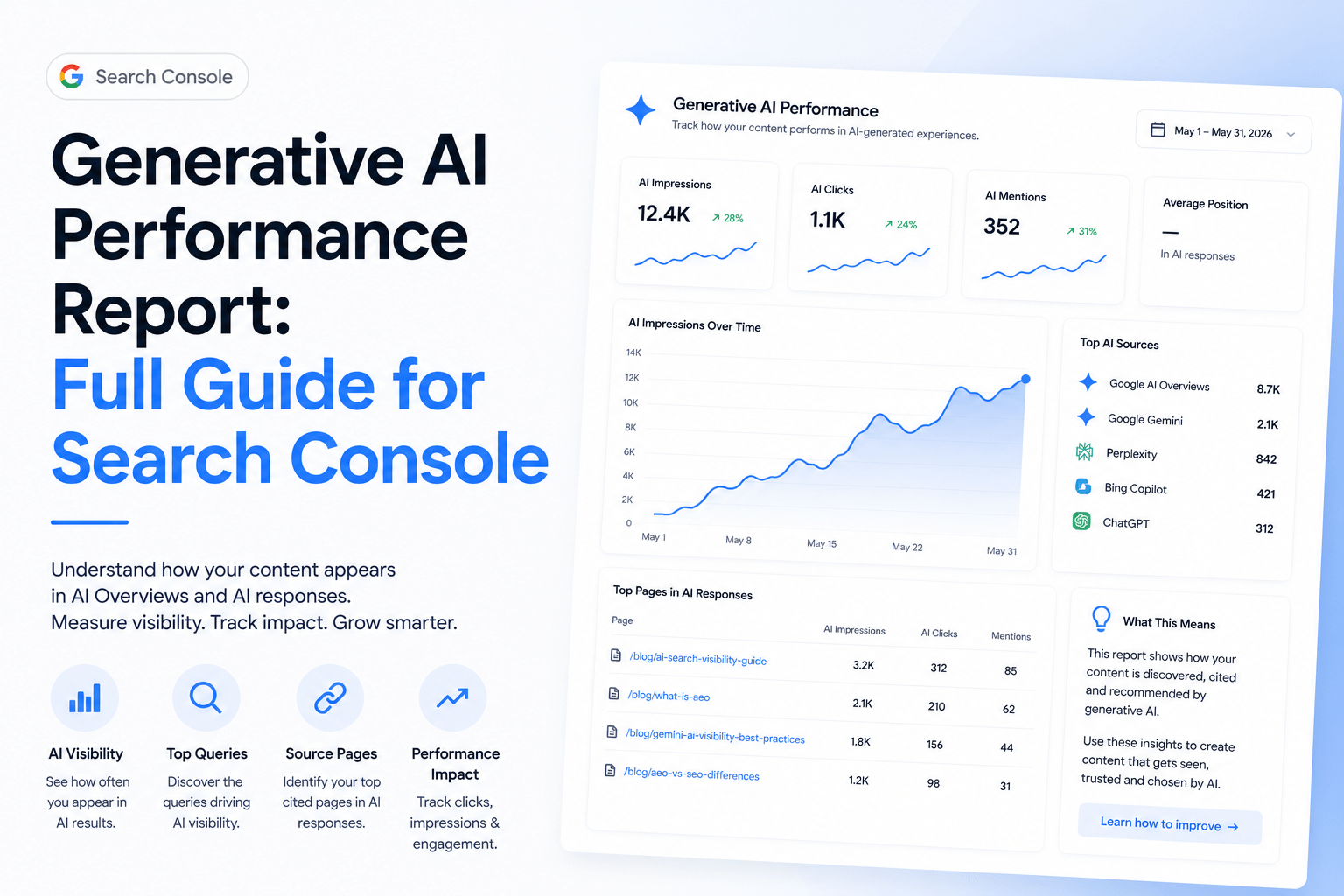

AI search visibility is now one of the most important factors in modern SEO. As tools like ChatGPT, Perplexity, and Google’s AI Overviews become the first place people go for answers, showing up in those results requires a different approach. Traditional keyword ranking still matters. However, AI engines pull content differently — they look for clear, structured, and trustworthy information. This guide covers the best practices you can follow to improve your AI search visibility and get your content extracted, cited, and surfaced in 2026.
What AI Search Visibility Actually Means
AI search visibility is the likelihood that your content gets surfaced, cited, or summarised by AI-powered search tools. These include Google’s AI Overviews, ChatGPT browsing, Perplexity, and Bing Copilot. Unlike traditional search, AI engines do not always return a list of blue links. Instead, they extract specific answers directly from web pages and present them to the user. Therefore, your content needs to be structured in a way that AI engines can read, understand, and trust.
Furthermore, AI search visibility is not just about keywords anymore. It is about whether your content is the most useful, clearly structured, and contextually complete answer to a given question. AI engines favour content that is self-contained, factual, and written for humans — not optimised purely for crawlers.
- AI Overviews pull from pages that directly answer questions
- Perplexity and ChatGPT cite sources with clear, structured paragraphs
- Bing Copilot favours content with strong topical authority
- Pages with schema markup and clear headings perform better in AI results
AI Search Visibility Starts With Content Structure
Additionally, AI search visibility depends heavily on how well your content is structured. AI engines extract individual paragraphs and headings when composing answers. If your paragraphs are vague, long, or dependent on surrounding context, they become harder to extract. As a result, well-structured content consistently outperforms dense, unformatted writing in AI-generated results.
Each paragraph should open with its main point stated clearly. For example, instead of writing “This helps users find information,” write “Internal linking helps users navigate your website.” That self-contained style is exactly what AI engines scan for when building summaries or citations.
How to Structure Content for AI Extraction
Furthermore, every section of your article should be able to stand on its own. AI engines do not always read your content from top to bottom. They pull specific blocks of text that match a user’s query. Therefore, each H2 or H3 section needs to make sense without requiring the reader to have read everything before it.
- Open each section with a direct, definition-style sentence
- Keep paragraphs under four sentences
- Use bullet points to list steps, features, or comparisons
- Bold the core answer or term at the start of key sections
- Avoid starting paragraphs with “this,” “it,” or “these” — name the subject explicitly
Build Topical Authority to Improve AI Search Visibility
Topical authority is a major signal for ai search visibility in 2026. AI engines are more likely to cite a website that consistently covers a subject in depth. A single well-written article is helpful. However, a cluster of related articles that collectively cover a topic signals expertise, trust, and depth — which AI engines reward.
Consequently, content planning matters more than ever. Instead of publishing random articles, you should build content around topic clusters. Each cluster should have a central pillar page supported by more specific articles. This structure helps AI engines understand that your site is a reliable source on a given subject.
Using Real Search Data to Build Authority
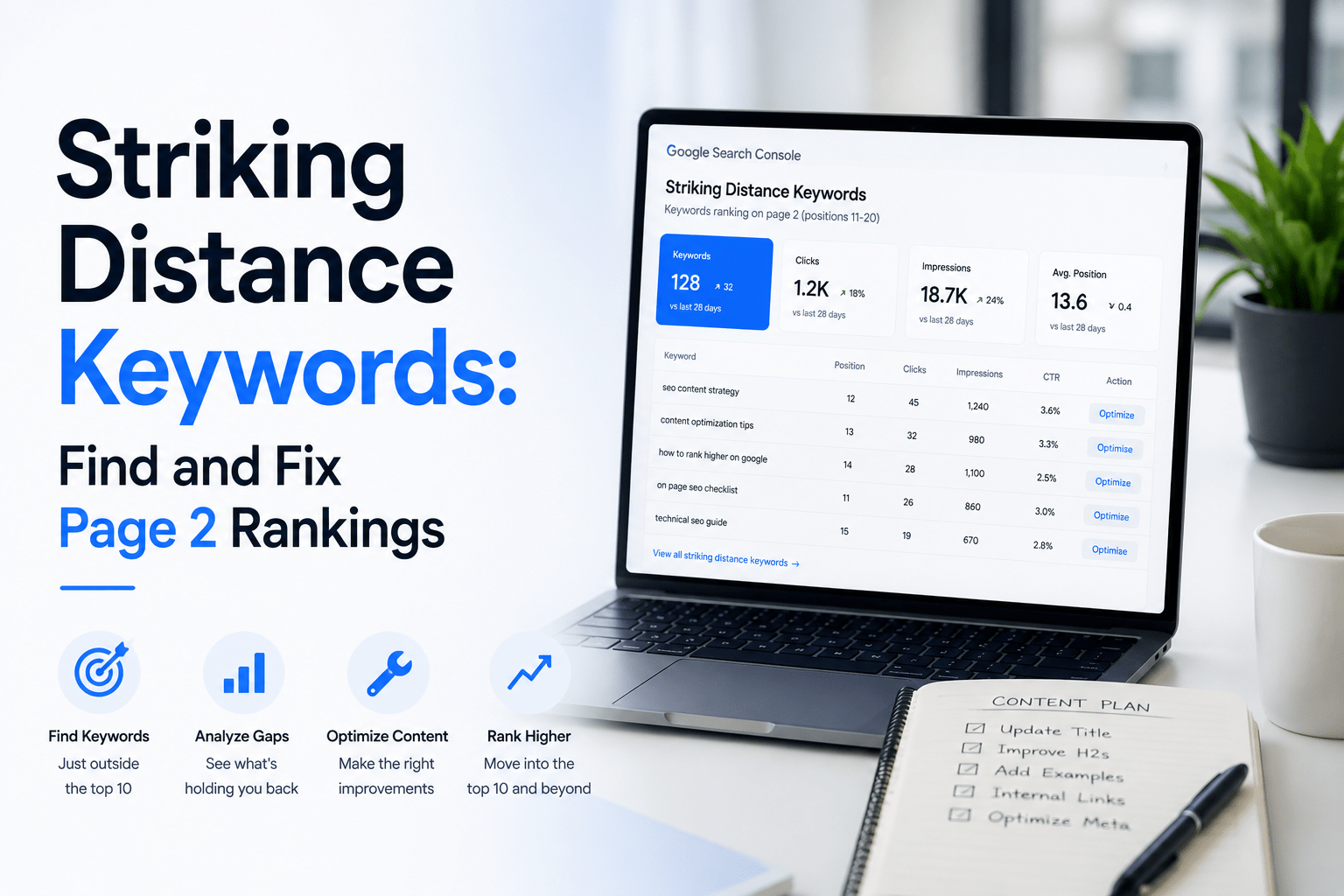
Moreover, smarter content planning starts with real search data. Tools like Remway use your actual Google Search Console data — impressions, clicks, average position, and CTR — to find genuine content opportunities. Rather than guessing what to write next, you can plan articles based on what real users are already searching for. This data-led SEO approach helps you build topical authority faster and more efficiently.
- Use Google Search Console to find queries with high impressions but low CTR
- Group related queries into topic clusters
- Write supporting articles that answer specific questions within your niche
- Update existing content regularly to maintain freshness signals
Write for Search Intent, Not Just Keywords
AI search visibility improves when your content genuinely matches what the user wants to find. Search intent refers to the underlying goal behind a query. For example, someone searching “how to fix slow website” wants a step-by-step guide — not a product page. AI engines are very good at detecting whether your content matches the intent behind a query.
Therefore, before writing any article, you should ask: what does this person actually want to know? Then structure your content to answer that question as directly and completely as possible. In contrast, content that is only optimised around keywords without addressing real user needs tends to perform poorly in AI-generated results.
- Match your content format to the query type — guides, lists, comparisons, or definitions
- Answer the main question within the first 100 words
- Include related questions to cover the full topic
- Avoid padding your article with filler sentences that add no value
Technical Signals That Support AI Search Visibility
Beyond content, ai search visibility is also supported by technical signals that tell AI engines your site is trustworthy and well-maintained. Schema markup is one of the most effective tools available. By adding structured data — such as FAQ schema, Article schema, or HowTo schema — you help AI engines understand exactly what type of content each page contains.
Similarly, page speed, mobile usability, and Core Web Vitals continue to matter. AI engines pull from pages that load quickly and work well across devices. Furthermore, HTTPS, clean URL structures, and crawlable page architectures all support your visibility in AI-generated results.
| Best Practice | Why It Matters for AI Search | Difficulty Level |
|---|---|---|
| Self-contained paragraphs | AI engines extract individual blocks of text | Low |
| Schema markup (FAQ, Article) | Helps AI engines categorise your content accurately | Medium |
| Topical authority clusters | Signals expertise and trustworthiness to AI systems | Medium |
| Search intent matching | Ensures content aligns with what users actually want | Low |
| Page speed and Core Web Vitals | AI tools prefer fast, technically sound pages | Medium–High |
| Data-led content planning | Targets real search queries with actual demand | Low with the right tool |
Earn Citations and Trust From AI Engines
Finally, ai search visibility is closely tied to how trustworthy your content appears. AI engines like Perplexity and ChatGPT actively cite sources. However, they choose sources that appear credible, frequently referenced, and factually grounded. Building trust signals into your content strategy is therefore a direct investment in your AI search performance.
One practical way to earn citations is to write content that other sites reference and link to. Additionally, being cited by authoritative sources in your industry increases the probability that AI engines will treat your site as a reliable source. According to Google’s SEO Starter Guide, creating helpful, people-first content remains the foundation of strong search performance — and that principle applies directly to AI search as well.
- Publish original research, data summaries, or expert perspectives
- Write content that other sites naturally want to reference
- Keep your information accurate and up to date
- Use a clear author byline and demonstrate expertise on your topic
How Remway Helps You Grow AI Search Visibility
Remway is built specifically to help you stop guessing what to write and start creating useful SEO content based on real search data. By connecting to your Google Search Console, Remway surfaces content opportunities from your actual impressions, clicks, CTR, and average position. As a result, every article you plan is grounded in genuine search demand — which directly supports your ai search visibility over time. Doing this consistently over time will help move your page higher in googles search rankings.
Moreover, Remway helps you match your brand voice while building the topical authority that AI engines reward. Whether you are a SaaS founder, a small business owner, or a content marketer, Remway gives you a clearer, faster, and more data-led SEO workflow. You can find what to write next, build topic clusters, and turn search data into articles that are ready to rank — in both traditional and AI-powered search results.
If you want to see how Remway can improve your content strategy and AI search visibility, book a free demo call with the Remway team today. See exactly how real search data can shape smarter content planning for your website.
Frequently Asked Questions
What is AI search visibility and why does it matter in 2026?
AI search visibility is the likelihood that your content gets surfaced or cited by AI-powered tools like Google AI Overviews, Perplexity, or ChatGPT. In 2026, a growing share of search journeys begin with AI-generated answers rather than traditional results pages. Therefore, if your content does not appear in those AI responses, you are missing a significant source of organic traffic and brand exposure.
How does content structure affect AI search visibility?
Content structure directly affects AI search visibility because AI engines extract individual paragraphs and sections rather than reading full articles. Content that uses clear headings, self-contained paragraphs, and direct opening sentences is far easier for AI tools to extract and cite. Consequently, well-structured content consistently performs better in AI-generated results than dense, unformatted writing.
Does schema markup help with AI search visibility?
Yes, schema markup supports AI search visibility by helping AI engines understand exactly what type of content a page contains. FAQ schema, Article schema, and HowTo schema are particularly useful. They give structured signals that AI tools can interpret quickly and accurately. Adding schema markup is one of the most practical technical steps you can take to improve your content’s chances of being surfaced in AI search.
How can I use Google Search Console to improve AI search visibility?
Google Search Console provides real data on which queries are generating impressions, clicks, and average position for your site. You can use this data to identify content gaps, find queries with high impressions but low CTR, and plan articles that match real search demand. Tools like Remway connect directly to your Search Console data and turn those insights into actionable content opportunities — which builds the topical authority AI engines reward.
How often should I update content to maintain AI search visibility?
AI search visibility benefits from content that stays accurate and current. Updating articles every three to six months is a practical starting point for most websites. You should prioritise updating pages that cover fast-moving topics, contain outdated data, or have dropped in average position. Regular content updates signal to both traditional search engines and AI tools that your site is an active, trustworthy source of information.