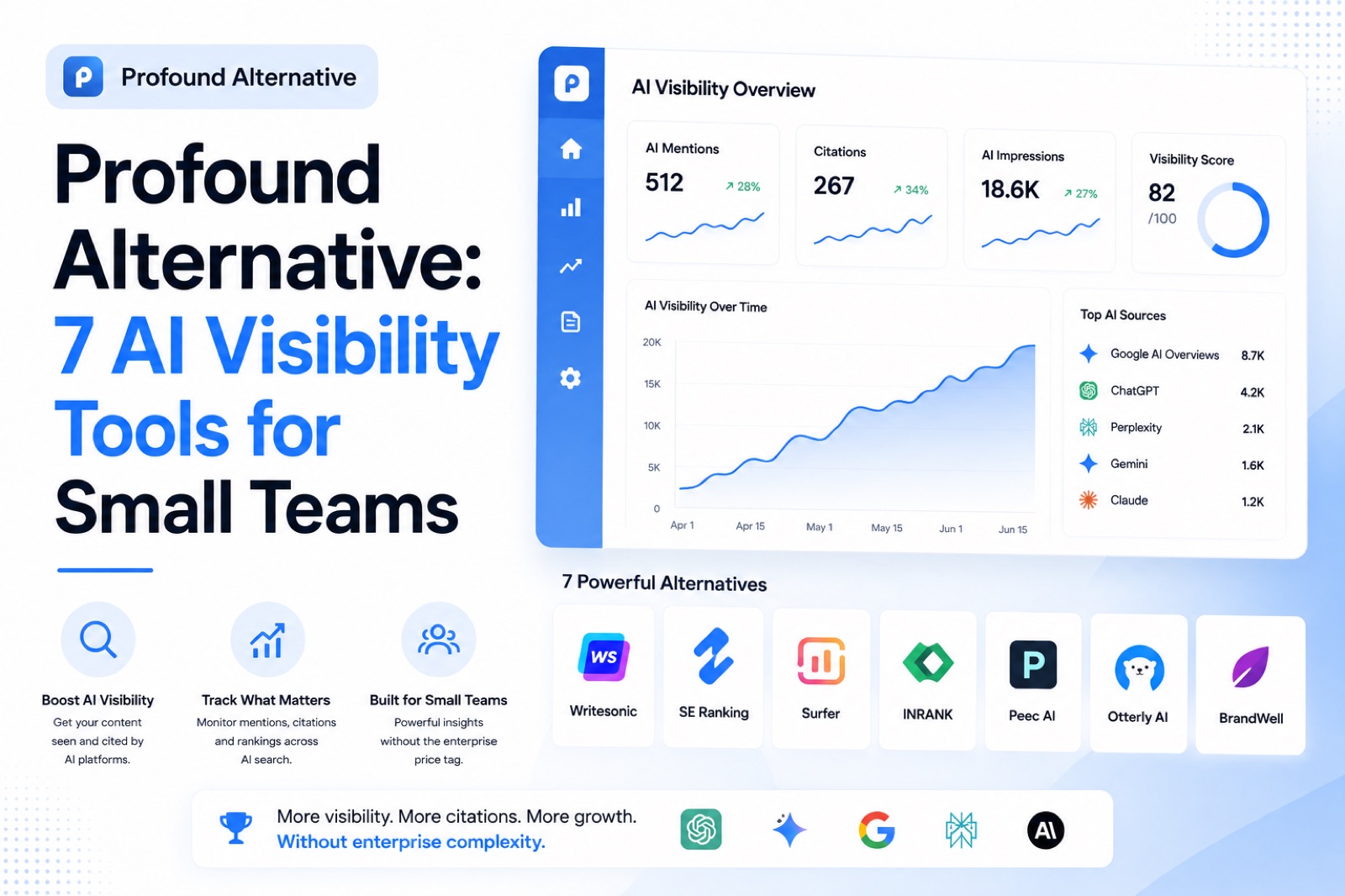
A profound alternative is worth considering when you have evaluated Profound, found the product genuinely impressive, and then seen the pricing. Profound is built for enterprise AEO teams with analysts, procurement cycles, and reporting structures to match. If your marketing team has three people and a lean budget, that fit is simply not there. This article covers what Profound does well, where it stops working for smaller teams, and seven alternatives worth comparing right now.
What Profound Does Well
Profound is one of the most structured AI visibility platforms available in 2026. It runs daily prompt sets across multiple AI platforms, including ChatGPT, Gemini, Perplexity, and Claude, then tracks citations, sentiment, and competitive presence over time. The reporting layer is thorough. Enterprise teams can monitor how their brand appears in AI-generated answers, compare share-of-voice against named competitors, and pull structured exports for stakeholder reviews.
Additionally, Profound handles prompt management at scale. You can run hundreds of prompts across different topic clusters, segment by geography or buyer persona, and receive alerts when citation patterns shift. For a dedicated AEO analyst, that depth is genuinely useful. Furthermore, the competitive intelligence layer is strong. Seeing which competitors get cited more often, and on which AI engines, is a real insight that smaller tools do not always replicate well.
To understand more about what AI visibility tracking actually involves before comparing tools, this guide on what AI search visibility means for brands is a useful starting point.
Where Profound Stops Fitting Small Teams
Profound’s pricing structure is designed around enterprise procurement. Published pricing has varied across sources, so readers should confirm current figures directly with Profound before drawing conclusions. That said, multiple independent reviews describe an entry tier that limits prompt runs and engine coverage, with a meaningful jump to a full enterprise contract that includes custom onboarding and dedicated support.
For a solo founder or a small in-house team, that jump is a problem. You may not need daily prompt runs across six AI platforms. You may only need to know whether your brand appears in ChatGPT and Perplexity answers for ten core queries. Paying for infrastructure built for a 20-person AEO team is a poor fit regardless of how good the product is.
Contract length is another consideration. Enterprise tools typically require annual commitments, which adds financial risk for smaller teams still testing whether AI visibility monitoring is worth the investment. If you are evaluating a BrightEdge alternative for similar reasons, the pattern will feel familiar.
What to Actually Compare Across a Profound Alternative
When evaluating any profound alternative, the right criteria are more specific than a general feature checklist. These are the dimensions that actually affect whether a tool works for a small team.
- AI engines covered: Which platforms does the tool monitor — ChatGPT, Gemini, Perplexity, Claude, Copilot? Entry tiers often cover fewer.
- Prompts tracked per month: Some tools limit you to 50 prompts; others allow hundreds. Match this to your actual query volume.
- Monitor only versus act: Some tools surface data. Others help you create content in response to gaps. Know which you need.
- Seats included: A single-seat plan is fine for a solo founder but limits a team of four.
- Contract length: Monthly plans reduce risk when you are still validating the workflow.
- Time to first insight: How quickly can you see meaningful data after signup? Some tools require days of data collection before the dashboard is useful.
For a broader view of how to evaluate AI visibility tools compared across the market, that resource covers additional options beyond this list.
Profound Alternative Shortlist: Seven Tools Worth Evaluating
The following seven tools each represent a genuine profound alternative for a different type of small team. Each entry covers who it suits, pricing shape, engine coverage, and an honest trade-off.
1. Otterly.AI
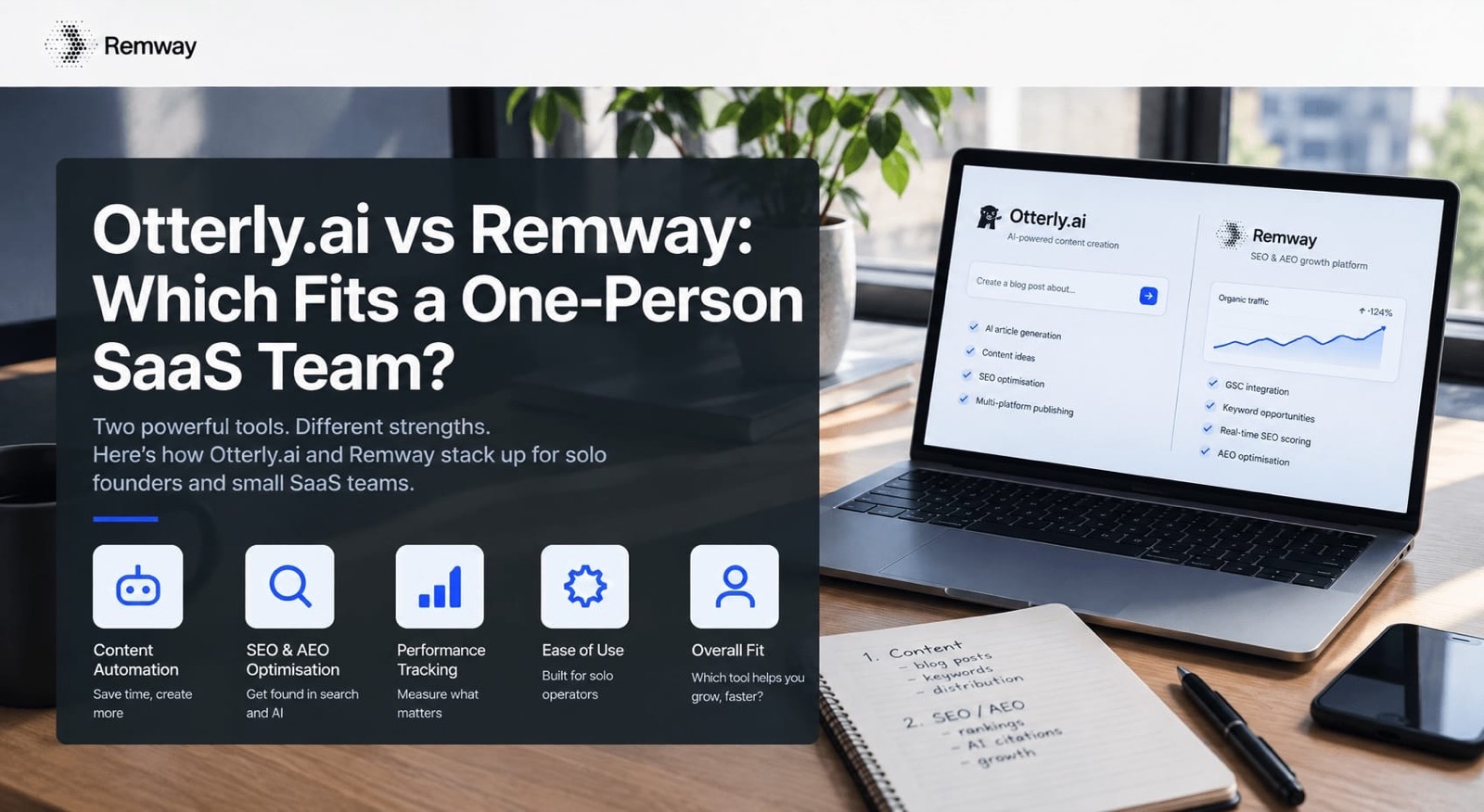
Otterly.AI is built for marketers who want prompt-level visibility tracking without enterprise complexity. It monitors brand and competitor mentions across ChatGPT, Perplexity, and Gemini, with a clean dashboard and monthly plans. The trade-off is that reporting depth is lighter than Profound, and prompt volume on entry plans is capped. It suits small teams who want to start tracking without a long-term commitment.
2. Peec AI
Peec AI focuses on brand mention monitoring across AI platforms, with particular attention to sentiment and share-of-voice. Pricing is accessible for small teams, with monthly billing available. Engine coverage is competitive for the price point. However, Peec AI is a narrower product — it monitors visibility but does not help you produce content in response to gaps, so it works best alongside a separate content workflow.
3. Semrush AI Visibility Toolkit
Semrush added AI visibility features to its existing platform, which means existing Semrush subscribers can access brand monitoring across AI platforms without a separate tool. Coverage includes ChatGPT and Perplexity. The honest trade-off is that the AI visibility features sit inside a broader SEO suite, so you are paying for functionality you may not need. That said, if your team already uses Semrush for keyword research and site auditing, the additional AI visibility layer is worth activating. Semrush publishes current pricing at semrush.com/prices.
4. Ahrefs Brand Radar
Ahrefs Brand Radar monitors how often a brand appears in AI-generated responses, drawing on Ahrefs’ established crawl infrastructure. Like Semrush, it sits inside a full SEO suite. If your team already uses Ahrefs for backlink analysis and keyword tracking, Brand Radar adds AI visibility data without switching tools. The limitation is that standalone AI visibility is not what Ahrefs is built for, and the depth of citation-level analysis is thinner than a dedicated monitoring tool. Current Ahrefs pricing is at ahrefs.com/pricing.
5. Scrunch AI
Scrunch AI is a monitoring and analytics platform that tracks brand presence across AI platforms and large language models. It suits marketing teams that want structured reporting on how their content is being cited. Pricing is more accessible than Profound, and onboarding is faster. The trade-off is that Scrunch AI is a newer entrant, so the data history and benchmark comparisons are shallower than more established platforms.
6. LLMrefs
LLMrefs tracks which URLs are cited by large language models, making it useful for teams who want to understand content-level citation patterns rather than just brand mentions. It is one of the more affordable options in this list and suits solo founders or lean teams running content-led strategies. The limitation is that LLMrefs is a focused tool — it does not cover sentiment, share-of-voice, or competitor tracking at the same level as broader platforms.
7. Remway
Remway is a content and SEO planning tool that helps small teams find content opportunities using real search data, then build AI search visibility through a consistent content workflow. It is worth being direct about where Remway fits and where it does not. Remway is a smaller and newer product than Semrush or Ahrefs. It does not replace a full SEO suite. It does not offer the same depth of real-time AI citation monitoring as Profound or Otterly.AI.
Where Remway is a strong fit is for founders and small teams who want to build AI visibility through better content planning, using their own generative AI performance report data from Google Search Console to find gaps and plan articles that earn citations over time. If you want a monitoring dashboard first, start elsewhere. If you want a smarter content workflow that builds visibility, Remway is worth trialling.
Comparison Table: Profound and Seven Alternatives
| Tool | Best For | AI Engines Covered | Pricing Shape | Monitor Only or Also Act | Contract Flexibility |
|---|---|---|---|---|---|
| Profound | Enterprise AEO teams | ChatGPT, Gemini, Perplexity, Claude, more | Enterprise contract (confirm with vendor) | Monitor + reporting | Annual typical |
| Otterly.AI | Small marketing teams | ChatGPT, Perplexity, Gemini | Monthly plans available | Monitor | Monthly |
| Peec AI | Brand mention tracking | Multiple platforms | Accessible monthly pricing | Monitor | Monthly |
| Semrush AI Toolkit | Existing Semrush users | ChatGPT, Perplexity | Add-on to existing Semrush plan | Monitor + SEO suite | Monthly or annual |
| Ahrefs Brand Radar | Existing Ahrefs users | Multiple AI platforms | Included in Ahrefs plans | Monitor + SEO suite | Monthly or annual |
| Scrunch AI | Content-focused teams | Multiple LLMs | More accessible than enterprise tools | Monitor + analytics | Flexible |
| LLMrefs | Solo founders, lean teams | Major LLMs | Low-cost entry | Monitor (URL-level) | Monthly |
| Remway | Content-led SEO growth | Via GSC data | Accessible for small teams | Plan + act | Monthly |
How to Choose the Right Profound Alternative for Your Situation
Choosing the right profound alternative depends less on feature lists and more on your team structure and what you actually need to do with the data.
Solo founder running content marketing
If you are a solo founder writing your own content and want to know whether your brand appears in AI answers, LLMrefs or Otterly.AI give you that data at a price that makes sense for one person. Remway suits you if you want a data-led way to plan what to write next, using search data to find gaps rather than guessing. You do not need all eight features Profound offers. Start with the narrowest tool that answers your core question.
Small in-house marketing team
A small in-house team of two to five people typically needs monitoring data plus a way to act on it. Peec AI or Scrunch AI handle the monitoring side. If your team already pays for Semrush or Ahrefs, activate the AI visibility features before adding a separate tool. For content planning and execution, Remway fits here as a complement rather than a replacement. Understanding which AI visibility metrics to track in Gemini is a useful step before committing to any platform.
Agency managing several client accounts
Agencies need multi-client dashboards, white-label reporting, and prompt volumes that scale across accounts. Otterly.AI and Scrunch AI both offer agency-oriented plans. Semrush remains a strong choice if the agency already uses it for client SEO work. Profound is viable here if you have a client willing to fund enterprise-level monitoring. For agencies helping clients build visibility through content, this comparison of MarketMuse alternatives for small SaaS teams covers overlapping tools worth considering alongside this list.
The AI search landscape is also shifting at the platform level. For context on how paid placements are changing AI-driven search, this overview of ChatGPT ads and what it means for founders is relevant background for anyone building an AI visibility strategy in 2026.
Frequently Asked Questions
How much does Profound cost?
Profound pricing varies depending on the tier and contract structure. Published figures have differed across third-party sources, so the safest approach is to request current pricing directly from Profound before making a decision. Entry tiers exist, but most reviewed plans describe a significant step up to full enterprise contracts with custom onboarding. Do not rely on any single third-party figure.
What is the cheapest profound alternative?
LLMrefs is among the most affordable options for teams that want URL-level citation tracking across large language models. Otterly.AI and Peec AI also offer accessible monthly pricing for brand mention monitoring. The cheapest profound alternative depends on your exact needs — a URL citation tracker costs less than a full sentiment and share-of-voice platform, so clarify what you actually need before comparing prices.
Do I need a dedicated AI visibility tool, or is Semrush or Ahrefs enough?
If your team already uses Semrush or Ahrefs, activating their AI visibility features is a reasonable first step before paying for a separate tool. However, dedicated tools like Otterly.AI or Scrunch AI typically offer more granular citation tracking, sentiment data, and prompt management than the AI features built into general SEO platforms. Start with what you already pay for, then evaluate whether the depth is sufficient for your needs.
How many AI engines should a visibility tool cover?
For most small teams in 2026, coverage of ChatGPT, Gemini, and Perplexity covers the majority of AI-driven search queries. Claude and Copilot are worth including if your audience is in sectors where those platforms are common, such as enterprise software or productivity. Paying for coverage of six or more engines is only necessary if you have data showing your audience actively uses those platforms.
Is Profound only for enterprise teams?
Profound is not exclusively enterprise, but its pricing structure, prompt volumes, and reporting infrastructure are designed with larger teams in mind. Smaller teams can use Profound, but a profound alternative will usually offer a better cost-to-value ratio for a team with fewer than ten people and no dedicated AEO analyst. The product quality is not in question — the fit is.