
Understanding how Perplexity chooses sources is one of the most practical things a small marketing team can do to improve its AI search visibility. Perplexity retrieves pages live at query time, assigns citations sentence by sentence, and favours content that is specific, credible, and structured for direct answers. This article breaks down the documented mechanics, separates them from vendor speculation, and gives you a method to track whether your pages are actually being cited.
How Perplexity chooses sources: live retrieval, not a training snapshot
Perplexity retrieves pages in real time every time a user submits a query, rather than drawing answers from a static training dataset. This is the most important structural difference between Perplexity and models like the base version of GPT-4. Because retrieval happens at query time, freshness genuinely matters, and a page published yesterday can be cited tomorrow.
According to Perplexity's Help Center, every answer includes numbered citations linking directly to the original sources so users can verify the information themselves. That numbered citation structure is worth understanding, because it shapes everything about how source selection works: Perplexity is not summarising a topic in general terms, it is building an answer claim by claim and attaching a source to each one.
Perplexity uses a hybrid retrieval approach. It runs its own crawler, PerplexityBot, and also draws on third-party search APIs. Bing indexation is commonly cited as a factor, and getting your site indexed by Bing is a reasonable precaution. But it is not a confirmed hard requirement. What is confirmed is that PerplexityBot crawls independently, so blocking it in your robots.txt file will reduce your chances of being cited, regardless of your Bing status.
What signals actually influence which pages get cited?
Perplexity does not publish a fixed citation formula. As AuthorityTech notes, its Search API documentation describes hybrid retrieval and multi-stage ranking, but no universal source weights, candidate counts, or scoring thresholds are disclosed to the public. Any vendor blog that presents a precise ranking formula as settled fact is extrapolating beyond what Perplexity has confirmed.
That said, several signals are consistent with Perplexity's own public statements and with observable citation patterns:
- Specificity and original data: Pages that contain a direct, precise answer to the query, backed by specific figures or first-hand research, are more likely to be pulled in at the sentence level.
- Freshness: Because retrieval is live, recently updated pages have a real advantage on time-sensitive topics. Evergreen content should be reviewed and re-dated when the underlying facts change.
- Structure: Clear headings, short paragraphs, and definition-style opening sentences make it easier for Perplexity's retrieval layer to extract and attribute a specific claim.
- Credibility and authorship: Named authors with credentials, transparent editorial policies, and citations to primary sources all signal trustworthiness.
- Cross-source consensus: When multiple independent pages agree on a claim, Perplexity is more likely to include that claim and cite one or more of those sources.
Omnieclipse reports that Perplexity Research has stated it prioritises indexing documents from authoritative domains and on undercovered topics. That second point is significant for small teams: a niche page with no competition can outperform a large domain if it is the clearest answer available for that specific query.
How many pages does Perplexity consult, and how many does it cite?
Perplexity consults far more pages than it cites in the final answer. Cicero observes, based on third-party analysis rather than a Perplexity statement, that Perplexity typically consults around ten pages and cites only three or four. Lemniscate Growth puts the citation range at four to ten sources for most standard answers, with simple factual questions at the lower end of that range.
The practical implication is competitive but not hopeless. Your page does not need to rank first on Google. It needs to be the clearest, most specific answer to the exact claim Perplexity is trying to support at that sentence in its response. That is a different optimisation target, and it is one where a focused small team can compete with much larger sites.
Why established publishers still have an advantage
A 2026 analysis by Otterly, cited in WebCoreLab's deep dive, found that publishers such as Reuters, Bloomberg, and McKinsey frequently dominate Perplexity citations, even when they do not rank at the top of Google for the same query. The reason appears to be their writing style: fact-forward, attributed prose with minimal filler. For a small team, that is an actionable lesson. Writing in the style of a credible briefing, not a marketing blog, increases your chances of being extracted and cited. This connects directly to the broader principles of AI search visibility for small teams: structure and credibility matter as much as keyword targeting.
How to get your site cited by Perplexity
Getting cited by Perplexity requires optimising for extractability, not just for traditional ranking signals. The goal is to make each individual paragraph a self-contained, citable answer to a specific question. Below is a practical checklist for small teams working without a large content budget.
- Allow PerplexityBot: Check your robots.txt file and confirm PerplexityBot is not blocked. Blocking the crawler removes you from live retrieval entirely.
- Write definition-style openers: Begin each section with a sentence that directly defines or answers the section topic. Perplexity extracts at the paragraph level, so the first sentence carries the most weight.
- Add named, linked evidence: Cite your sources by name within the sentence, the same way a credible briefing would. This signals trustworthiness to both Perplexity and to readers.
- Publish original data or proprietary insight: Even a small survey, a client case study, or a dataset unique to your organisation gives Perplexity a reason to cite you rather than a generic competitor.
- Target undercovered queries: Perplexity has stated it prioritises undercovered topics. A specific long-tail question with no strong existing answer is your best opportunity. Identifying those gaps is also where striking distance keywords work well: queries where you already have some impressions but no clear, citable answer on the page.
- Keep content fresh: Update pages when facts change, and include the date of last review so the retrieval layer can assess recency.
These principles also apply when optimising for other AI answer engines. The playbook for how to get cited by ChatGPT overlaps significantly, though the retrieval mechanics differ in important ways.
Does Perplexity use Google or Bing to decide which sources to pick?
Perplexity does not simply defer to Google or Bing rankings when choosing which sources to cite. The Otterly analysis referenced above confirms this: publishers that sit outside the top Google positions are regularly cited by Perplexity when their content is more fact-forward and specific than the pages that rank higher. Traditional SEO ranking is one input into retrieval, not a gate.
Bing indexation is worth pursuing because Perplexity is known to use third-party search APIs, and Bing is the most likely candidate. But a page that ranks well on Bing will not automatically be cited if its content is vague, over-hedged, or structured in a way that makes claim extraction difficult. The citation decision happens downstream of retrieval, in a multi-stage ranking process that weighs relevance and extractability alongside raw authority.
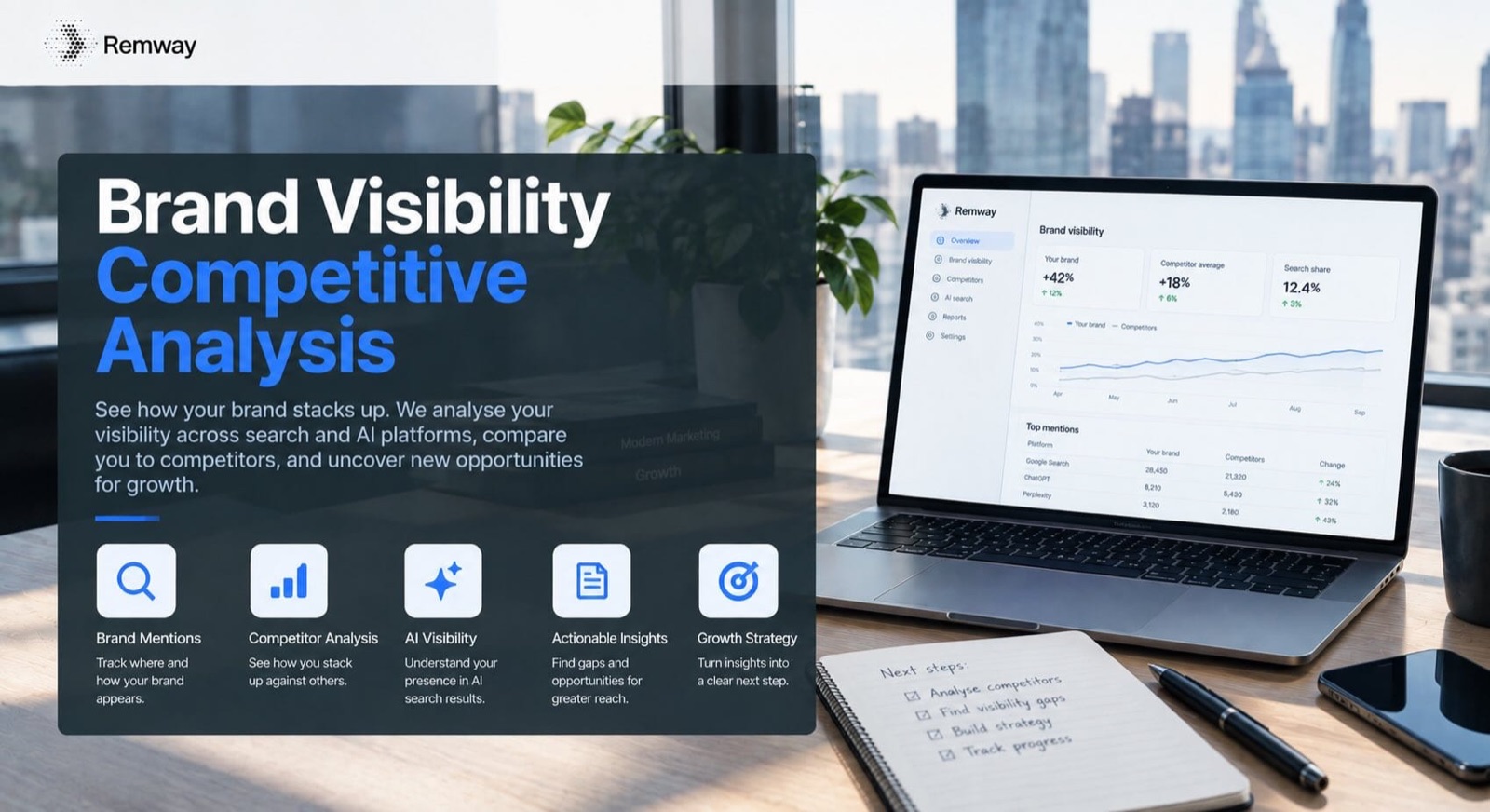
For small teams already thinking about brand visibility competitive analysis in AI search, this is useful context. Your competitors may rank above you on Google and still lose citations to you on Perplexity if your content is more precise and better structured.
How to check whether Perplexity is citing your pages
Measuring Perplexity citations without enterprise tools requires a systematic manual process, because Perplexity does not yet provide a publisher analytics dashboard equivalent to Google Search Console. The approach used by most small teams has three steps.
First, build a prompt list. Write out the 20 to 30 queries where you most want to appear: questions your target audience would type into Perplexity. Run those prompts regularly, at least once a week for time-sensitive topics, and record which sources are cited for each answer.
Second, track citation frequency by URL. A simple spreadsheet with columns for prompt, date, and cited URLs will show you patterns over time. Note whether your pages appear, and which specific claims they are cited for.
Third, compare citation patterns against your content changes. If you update a page and citations increase, that is signal. If a competitor's page starts appearing where yours did not, read that page and identify what it does differently at the sentence level. For teams that want to track this more systematically, tools built for AI visibility monitoring can automate parts of this process. The Generative AI Performance Report in Search Console is worth reviewing for broader AI visibility signals alongside your manual Perplexity tracking.
Comparison: what Perplexity has confirmed versus what vendors claim
| Claim | Source type | Confidence level |
|---|---|---|
| Each answer includes numbered citations linking to original sources | Perplexity Help Center | Confirmed |
| Perplexity retrieves pages live at query time | Perplexity Help Center | Confirmed |
| PerplexityBot crawls independently of Google and Bing | Perplexity documentation | Confirmed |
| Perplexity prioritises authoritative domains and undercovered topics | Perplexity Research statement via Omnieclipse | Stated by Perplexity, not independently verified |
| Perplexity consults around 10 pages and cites 3-4 | Third-party observation (Cicero) | Unconfirmed, plausible estimate |
| A fixed scoring formula determines citation selection | Various vendor blogs | Not confirmed, contradicted by AuthorityTech |
| Fact-forward prose style correlates with higher citation frequency | Otterly analysis via WebCoreLab | Observational, not a Perplexity statement |
Frequently Asked Questions
How does Perplexity choose which websites to cite?
Perplexity retrieves pages live at query time using its own crawler and third-party search APIs. It assigns citations at the sentence level, meaning each source is linked to the specific claim it supports. Pages that are specific, well-structured, recently updated, and authored credibly are more likely to be selected, though Perplexity does not publish a fixed scoring formula.
Does PerplexityBot need to crawl my site before I can be cited?
Allowing PerplexityBot to crawl your site significantly improves your chances of being cited. If you block PerplexityBot in your robots.txt file, your pages are excluded from live retrieval. You should check your robots.txt settings and confirm the bot is permitted. Bing indexation also helps, as Perplexity is known to use third-party search APIs.
Does Perplexity favour recent content over older pages?
Freshness is a genuine factor because Perplexity retrieves content in real time rather than from a training snapshot. Pages updated recently have an advantage on time-sensitive queries. For evergreen content, reviewing and re-dating pages when the underlying facts change is a practical way to maintain that freshness signal without rewriting from scratch.
How can I check whether Perplexity is citing my pages?
There is no official publisher dashboard for Perplexity citations in 2026. The most reliable method is to maintain a list of target queries, run them in Perplexity regularly, and record which URLs are cited and for which claims. Track this in a spreadsheet over time and compare patterns against any content changes you make. Some AI visibility monitoring tools can partially automate this process.
How Perplexity chooses sources: is it the same as Google ranking?
No. Perplexity citation and Google ranking are related but separate things. Pages that rank outside the top Google positions are regularly cited by Perplexity when their content is more specific and fact-forward than higher-ranking competitors. Bing indexation matters, but the citation decision is based on extractability and specificity, not search rank alone.