AI visibility tools compared in one place can save you hours of research and help you make a smarter decision for your SEO strategy. In 2026, more tools than ever claim to help you rank in AI-powered search results, answer engines, and traditional Google. However, not all of them are built the same way. Some focus on monitoring, some on content creation, and some on search data analysis. This guide breaks down 9 real options so you can see exactly what each one does and which fits your goals.
Why AI Visibility Tools Compared Properly Can Change Your Strategy
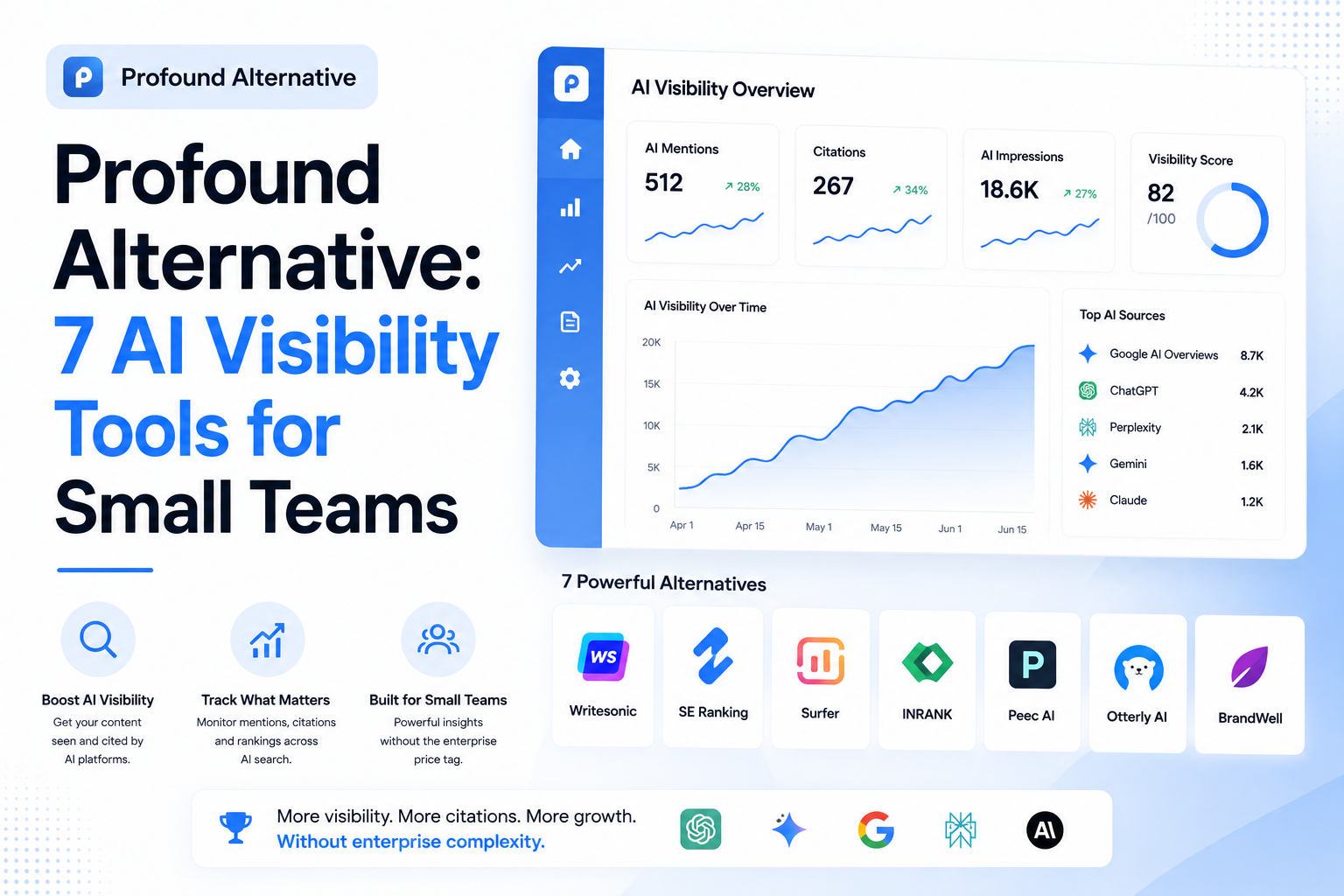
AI visibility tools are platforms that help website owners, marketers, and founders understand and improve how their content appears in AI-driven search environments. These include Google AI Overviews, ChatGPT, Perplexity, and other answer engines that now shape how people find information online. Additionally, these tools often support traditional SEO by surfacing content opportunities, tracking impressions, and improving search visibility.
Without the right tool, you are essentially guessing what to write and why. Furthermore, you may miss low-hanging SEO opportunities that are sitting right inside your existing search data. Therefore, choosing the right platform matters more in 2026 than it ever has before.
- AI search is now a primary discovery channel for many audiences
- Tools vary widely in how they use real search queries versus guesswork
- Some tools cover ai search visibility strategy end-to-end
- Data-led SEO consistently outperforms keyword guessing
- The right tool fits your team size, budget, and workflow
AI Visibility Tools Compared: The Full List of 9
AI visibility tools compared across 9 platforms gives you a clear picture of what the market actually looks like in 2026. Each tool below has been chosen because it genuinely exists and addresses some aspect of AI search visibility, content planning, or organic traffic growth. However, they differ significantly in focus, depth, and who they are built for.
1. Remway
Remway connects directly to your Google Search Console data and finds real content opportunities from your actual search queries, impressions, clicks, and average position. Instead of guessing what to write, Remway shows you which topics already have traction and helps you turn those insights into SEO-ready articles that match your brand voice. It is built specifically for founders, small teams, and marketers who want a data-led SEO workflow without hiring a full SEO team. Additionally, Remway supports smarter content planning for both traditional and AI search environments.
2. Surfer SEO
Surfer SEO focuses on on-page content optimisation. It analyses top-ranking pages and provides scoring and recommendations for improving content structure, keyword density, and headings. Surfer is well-suited for content teams that already know their target topics. However, it does not pull from your own Google Search Console data to find article ideas.
3. Clearscope
Clearscope is a content optimisation tool that grades your articles based on semantic relevance. It integrates with Google Docs and WordPress, making it easy to use during the writing process. Clearscope works well for larger content teams. That said, it focuses on optimisation rather than identifying what content to create in the first place.
4. MarketMuse
MarketMuse uses AI to build topic models and identify content gaps across your site. It shows you which subjects your website covers well and where authority is missing. MarketMuse is strong for enterprise-level content strategy. Nevertheless, it can feel complex and expensive for smaller teams or solo founders who need faster, simpler workflows.
5. Semrush
Semrush is one of the most comprehensive SEO platforms available. It covers keyword research, competitor analysis, backlink tracking, site audits, and content recommendations. For teams that need an all-in-one SEO suite, Semrush is a solid choice. However, the volume of features can feel overwhelming, and the cost is significant for small businesses or early-stage startups.
6. Ahrefs
Ahrefs is best known for its backlink analysis and keyword explorer tools. It also includes a content explorer feature for finding popular content in any niche. Ahrefs gives you strong competitive intelligence. In contrast, it does not connect to your own site’s search query data to surface personalised content opportunities the way a tool like Remway does.
7. Frase
Frase combines content research and AI writing assistance. It pulls from search results to create content briefs and helps writers structure articles around search intent. Frase is useful for speeding up the research and drafting phase. Similarly to other tools in this category, it does not analyse your existing Google Search Console performance to find what is already working for your site.
8. BrightEdge
BrightEdge is an enterprise SEO platform that includes AI-powered insights for tracking organic performance and content recommendations. It is designed for large organisations with dedicated SEO teams. Consequently, BrightEdge is often out of reach for small businesses, freelancers, or startups that need practical SEO without a large budget or technical team.
9. SE Ranking
SE Ranking offers keyword tracking, site audits, competitor research, and content marketing tools. It is more affordable than Semrush or Ahrefs, making it accessible for smaller teams. SE Ranking covers the core SEO bases well. Furthermore, it has expanded its content tools in recent years, though it still focuses more on monitoring than on helping users find and create specific article ideas from real search data.
Side-by-Side Comparison Table
The table below summarises how each of the 9 ai visibility tools compared in this article differ across the most important dimensions for SEO content strategy in 2026.
| Tool | Uses Your GSC Data | Content Ideation | AI Search Focus | Best For | Pricing Level |
|---|---|---|---|---|---|
| Remway | Yes | Yes, from real queries | Yes | Founders, small teams, marketers | Affordable |
| Surfer SEO | No | Partial | Partial | Content optimisation teams | Mid-range |
| Clearscope | No | No | No | Large content teams | Mid-range |
| MarketMuse | No | Yes, topic modelling | Partial | Enterprise content strategy | High |
| Semrush | Partial integration | Yes | Partial | Full SEO teams | High |
| Ahrefs | No | Yes, competitor-based | No | Backlink and competitor research | High |
| Frase | No | Yes, brief-based | Partial | Writers and researchers | Affordable |
| BrightEdge | Yes | Yes | Yes | Enterprise SEO teams | Very high |
| SE Ranking | Partial | Partial | No | Small to mid-size businesses | Affordable |
What to Look for When Choosing Between AI Visibility Tools Compared Here
Choosing between AI visibility tools comes down to understanding your actual workflow, team size, and where your biggest SEO gaps are right now. Not every tool is designed for every stage of growth. Therefore, picking the right one means matching the tool’s strengths to your specific needs rather than just choosing the most popular option.
For example, if you are a founder or small marketing team, you likely need a tool that connects to your Google Search Console data and helps you find what to write next without requiring hours of manual research. In contrast, enterprise teams may need deeper integrations, reporting dashboards, and multi-site management features.
- Does the tool use your own real search queries or only generic keyword databases?
- Does it help you plan better articles or only optimise ones you have already written?
- Is it built for your team size and budget?
- Does it support your google search ranking goals directly?
- Can it help you address content decay on existing pages?
Furthermore, think about how much time you can realistically spend learning a new platform. A tool with a steep learning curve can slow your SEO workflow down rather than speeding it up. Above all, the best tool is the one you will actually use consistently.
How Remway Differs from Other AI Visibility Tools
Remway stands apart from most tools in this comparison because it starts with your own Google Search Console data rather than external keyword databases. Most platforms ask you to enter a topic or competitor URL and then suggest content based on that. Remway does the opposite. It reads the real search queries that are already sending impressions and clicks to your site and surfaces content opportunities directly from that data.
This means you are not guessing what to write. Instead, you are building a content strategy around what your audience is already searching for and finding on your site. Additionally, Remway helps you create SEO-ready articles that match your brand voice, which removes the disconnect between SEO strategy and actual writing quality.
Remway is also built for a specific audience: founders, marketers, small teams, and agencies who want practical SEO without the complexity of enterprise platforms. As a result, the workflow is faster, more focused, and more relevant to everyday content decisions. For teams that want data-led SEO without the overhead, Remway is a genuinely different kind of tool. According to Google’s own search documentation, content that matches real search intent consistently performs better in organic results, which is exactly what Remway is designed to support.
Frequently Asked Questions
What are AI visibility tools?
AI visibility tools are platforms that help website owners and marketers improve how their content appears in AI-powered search environments, including Google AI Overviews, ChatGPT, and Perplexity. They may also support traditional SEO by tracking organic traffic, analysing search data, and surfacing content opportunities. In 2026, these tools have become more important as AI-generated answers increasingly shape how people discover content online.
How do I choose between AI visibility tools compared in this article?
When reviewing AI visibility tools compared side by side, focus on three things: whether the tool uses your own Google Search Console data, whether it helps you identify article ideas proactively, and whether it fits your team size and budget. Enterprise platforms like BrightEdge suit large organisations. Meanwhile, tools like Remway are built for founders and small teams that need smarter content planning without a heavy learning curve or high cost.
Is Remway suitable for beginners in SEO?
Yes, Remway is designed to be accessible for people who are not SEO experts. It connects to your Google Search Console account and surfaces clear content opportunities from your actual search data. You do not need to understand advanced SEO to use it effectively. Remway explains what the data means and helps you turn those insights into SEO-ready articles, making it a practical starting point for founders and small business owners.
Do these tools work for AI search as well as Google?
Some tools in this comparison focus purely on traditional Google rankings, while others are beginning to address AI search environments like Google AI Overviews and answer engines. Remway is built with both in mind, helping users create content that matches real search intent, which is the foundation for performing well in both traditional and AI-driven search results. Always check each tool’s specific feature set before committing.
Why does using Google Search Console data matter for content strategy?
Google Search Console data shows you the real search queries that are already bringing impressions and clicks to your site. This data reflects genuine user interest and existing relevance. Therefore, basing your content strategy on this information means you are writing about topics your audience is already searching for, not topics you assume they care about. Tools that connect to this data, like Remway, help you stop guessing and start planning better articles based on evidence.