What is AI search visibility is a question more brands are asking as ChatGPT, Perplexity, Gemini, and Claude become primary research tools for buyers. AI search visibility refers to how often and how prominently an AI engine cites your brand, content, or website when answering questions related to your category. It is distinct from traditional Google rankings. A brand can rank on page one of Google and still be completely absent from AI-generated answers. For growing brands, that gap is becoming a serious risk to organic traffic and long-term search visibility.
What Is AI Search Visibility and Why Does It Matter Now
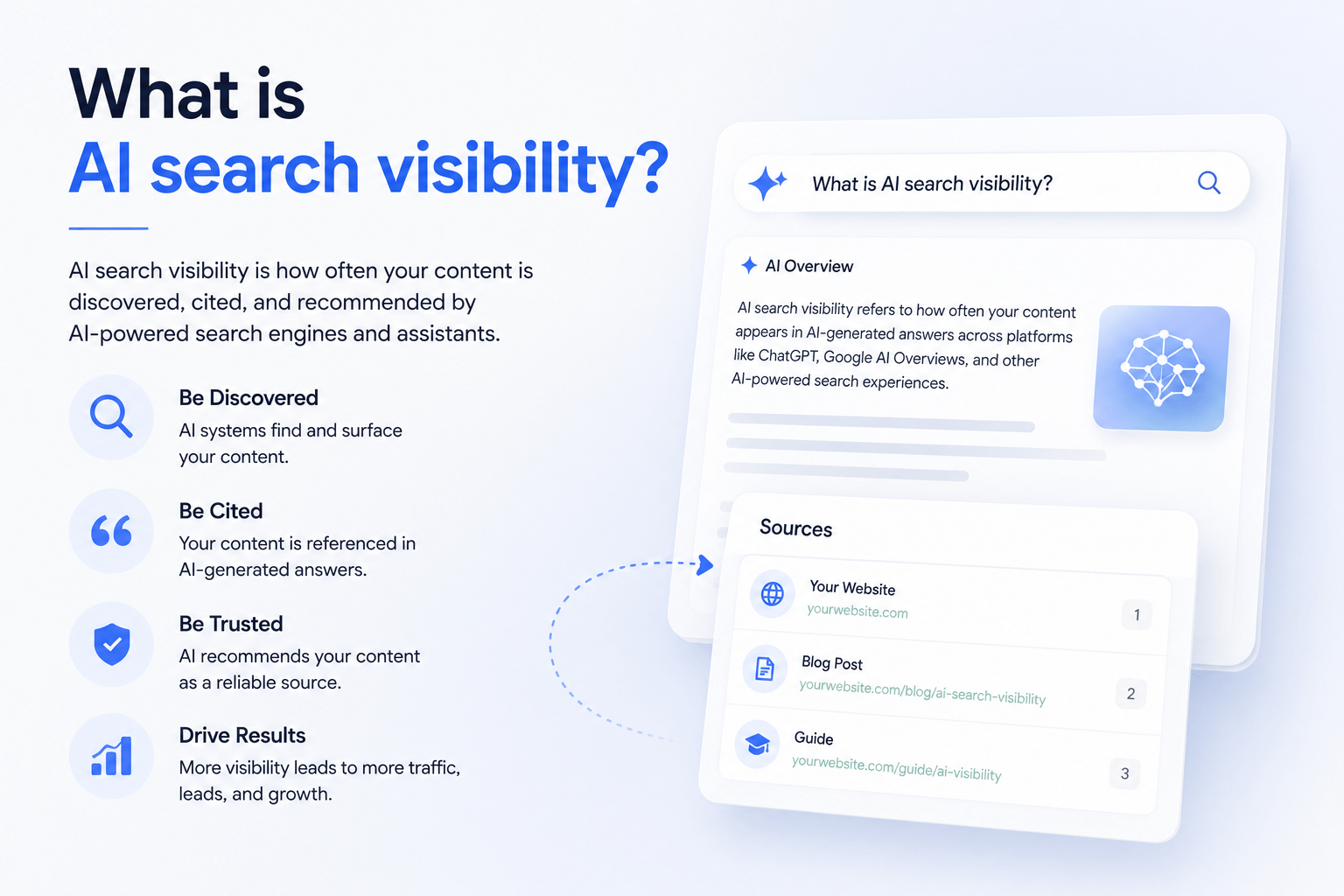
What is AI search visibility in practical terms? It is a measure of whether AI engines choose your content as a source when they construct answers for users. Traditional SEO tracks your position in a list of blue links. AI search visibility tracks whether you are cited at all inside a conversational answer, a summary, or a recommendation block.
This matters now because user behaviour has shifted significantly. Millions of people use ChatGPT, Perplexity, Google Gemini, and Anthropic Claude to get direct answers rather than clicking through to a results page. If your brand is not cited in those answers, you are invisible to a growing portion of your potential audience. Furthermore, the brands that do get cited build credibility and trust at a compounding rate.
- AI engines now handle a large share of informational and commercial queries
- Citations in AI answers drive referral traffic and brand awareness
- Being absent from AI answers can hurt brand authority even if Google rankings are strong
- Competitors who appear in AI citations gain an early-mover trust advantage
Additionally, AI search visibility affects how buyers perceive your expertise before they ever visit your website. For growing brands, appearing in AI-generated answers is quickly becoming as important as appearing on page one of Google.
How AI Search Visibility Is Measured
Measuring what is AI search visibility in practice requires a structured approach that differs from traditional rank tracking. Instead of monitoring keyword positions, you monitor citation rate across a defined set of questions relevant to your category.
The core measurement process works like this. First, you build a list of questions your target audience asks AI engines about your category, your competitors, and your topic area. Second, you query those AI engines and record which brands or sources get cited in the answers. Third, you calculate your citation rate: how often your brand appears versus how often it is absent. Finally, you track who else gets cited in your place, because those competitors reveal the content gap you need to close.
Key Metrics to Track
- Citation rate: the percentage of relevant AI queries where your brand is mentioned
- Share of voice: your citations compared to competitor citations across the same question set
- Source diversity: how many different AI engines cite you, not just one platform
- Topic coverage: which categories of questions cite you and which do not
- Citation context: whether you are cited as a primary source, a secondary option, or not at all
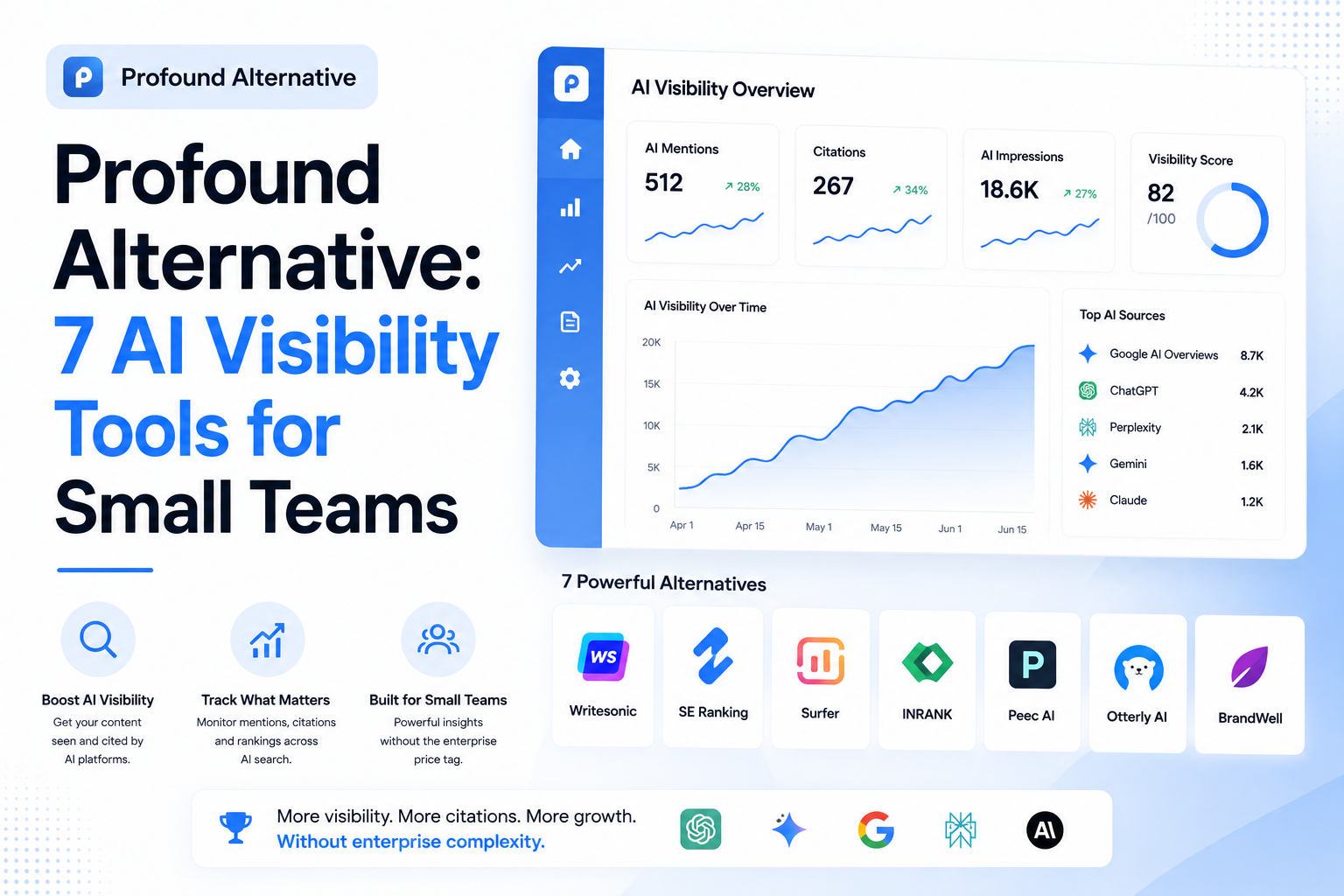
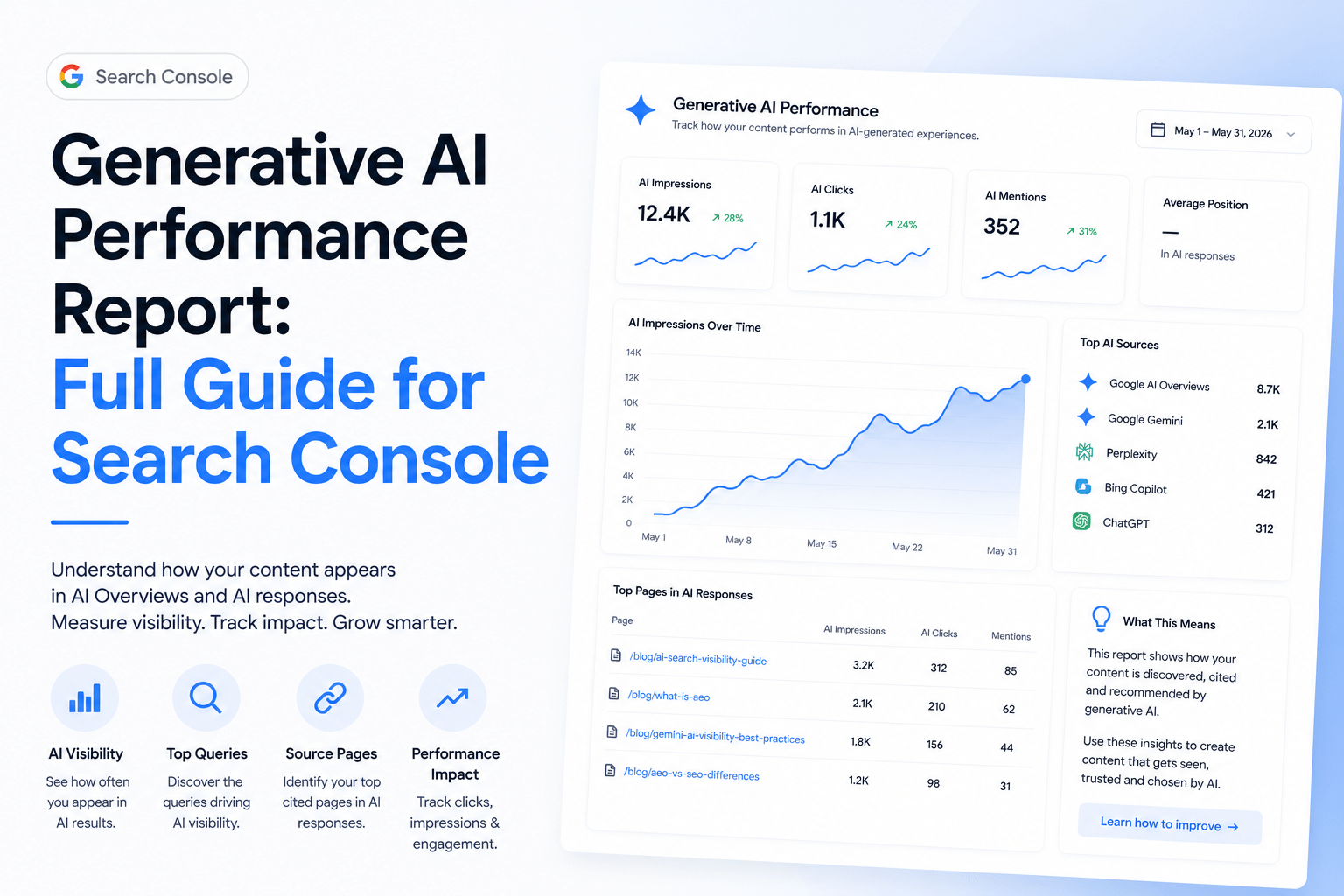
Tools that help you track AI search visibility directly are now available. Remway’s AI search visibility feature, for example, runs structured queries across AI engines and reports back which questions cite your brand, which cite your competitors, and where the gaps are. You can also explore a broader comparison of options in this overview of AI visibility tools compared to find the right fit for your team.
How AI Search Visibility Differs from Traditional SEO
AI search visibility and traditional SEO measure fundamentally different things, and confusing the two leads to bad content decisions. Traditional SEO is about position. You optimise pages to rank higher in a list of results, and success is measured by clicks, impressions, and average position in Google Search Console.
AI search visibility, in contrast, is about answer ownership. The question is not whether you rank second or fifth. The question is whether the AI engine references your content at all when constructing its answer. There is no position two in an AI answer. You are either cited or you are not.
A Side-by-Side Comparison
| Factor | Traditional SEO | AI Search Visibility |
|---|---|---|
| What is measured | Keyword ranking position | Citation rate in AI answers |
| Success metric | Clicks, impressions, CTR | Brand mentions, source citations |
| Primary platform | Google Search | ChatGPT, Perplexity, Gemini, Claude |
| Content format | Pages optimised for keywords | Content structured for direct answers |
| Competitive lens | Who ranks above you | Who gets cited instead of you |
| Tracking tool | Google Search Console | AI visibility tracking platforms |
Furthermore, traditional SEO and AI search visibility are not opposites. Strong Google rankings still matter. However, a data-led SEO strategy in 2026 needs to account for both dimensions. You can learn more about building strong Google search ranking alongside your AI visibility efforts, since the two reinforce each other when your content is well-structured.
How to Improve AI Search Visibility for Your Brand
Improving what is AI search visibility for your specific brand comes down to making your content easy for AI engines to find, understand, and trust. AI engines do not rank pages. They extract reliable, clearly-written information from sources they deem credible. Therefore, your content strategy needs to reflect that.
First, write in direct-answer format. Every section of your content should open with a clear, standalone statement that answers the question the section addresses. AI engines extract paragraphs independently, so each paragraph must make sense on its own without relying on surrounding context.
- Use definition-style openers for every H2 section to make content extractable
- Include structured FAQ sections with complete, self-contained answers
- Add schema markup, especially FAQPage and Article schema, to signal structure clearly
- Build credentialed authorship signals through author bios and consistent publishing
- Earn links and mentions from sources AI engines already trust
Second, cover your topic category comprehensively. AI engines tend to cite sources that cover a subject in depth rather than superficially. Building a content cluster around your core topics, where pillar pages link to supporting articles and vice versa, improves the likelihood that AI engines treat your site as an authoritative source.
Third, keep content current. AI engines increasingly distinguish between fresh and stale content. Monitoring content decay and refreshing articles that have lost relevance helps maintain your citation rate over time. Similarly, following AI search visibility best practices gives you a repeatable system for maintaining and growing your presence across AI platforms.
Which AI Engines Matter Most for Brand Visibility
AI search visibility spans multiple platforms, and each one draws from different sources and uses different methods to construct answers. Prioritising the right platforms for your audience is an important part of a practical content strategy.
ChatGPT remains the most widely used AI assistant globally and handles a large volume of product research, category comparison, and how-to queries. Perplexity is growing rapidly among research-oriented users and cites sources directly in its answers, making it highly valuable for brand visibility. Google Gemini is integrated into Google Search itself, which means strong traditional SEO and AI visibility overlap more on that platform. Anthropic Claude tends to favour detailed, well-sourced content.
- ChatGPT: broad consumer and B2B query volume, strong brand awareness value
- Perplexity: direct source citations visible to users, high credibility signal
- Google Gemini: ties directly into Google’s own search ecosystem
- Claude: favours long-form, structured, well-evidenced content
For brands targeting Google Gemini specifically, detailed guidance on Google Gemini AI visibility best practices is worth reviewing as a focused next step. Each platform rewards slightly different content signals, so understanding the differences helps you prioritise your content investment effectively.
Frequently Asked Questions
Does AI search visibility replace traditional SEO?
AI search visibility does not replace traditional SEO. Both matter in 2026. Traditional SEO drives clicks from Google’s search results pages, while AI search visibility determines whether your brand gets cited inside AI-generated answers on platforms like ChatGPT and Perplexity. The strongest content strategies address both at the same time. Many of the same practices, such as clear writing, structured content, and topic authority, support success across both channels.
How often should I check my AI search visibility?
Checking your AI search visibility monthly is a reasonable starting point for most brands. AI engines update their models and knowledge bases at varying intervals, so your citation rate can shift without any change on your end. If you are actively publishing new content or a competitor is growing quickly in your category, checking every two weeks gives you faster feedback. Consistent tracking matters more than the exact frequency you choose.
Can a small brand improve its AI search visibility?
Yes, a small brand can meaningfully improve its AI search visibility by focusing on a specific topic area rather than trying to cover everything. AI engines reward depth and clarity over volume. A small brand that publishes well-structured, direct-answer content on a focused set of questions can earn citations alongside much larger competitors. Credentialed authorship, schema markup, and consistent publishing all help build the trust signals AI engines look for when selecting sources.
What is AI search visibility tracking and how does it work?
AI search visibility tracking is the process of systematically querying AI engines with category-relevant questions and recording which brands or sources appear in the answers. Tracking tools automate this process by running a predefined question set across multiple AI platforms, then reporting your citation rate, your competitors’ citation rates, and the specific questions where you are absent. This data helps you identify content gaps and prioritise the articles most likely to improve your presence in AI-generated answers.
Which types of content earn the most AI citations?
Content that earns the most AI citations tends to be clear, structured, and genuinely useful. Definition-based articles that directly answer specific questions perform well. So do comparison pages, FAQ-style content, and in-depth category guides that cover a topic comprehensively. AI engines favour content where the answer is easy to extract without needing surrounding context. Practical, specific, and well-organised articles consistently outperform vague or overly promotional content when it comes to earning citations in AI-generated answers.